Introduction
In the world of software development and system administration, network commands are often relegated to a small toolkit of familiar utilities: ping to check for life, traceroute to map a path, and ipconfig or ifconfig to check an address. While indispensable, these tools only scratch the surface of a deep and powerful domain. The internet itself is built upon a language of network commands and protocols, a constant conversation happening between devices. Every API call, every database query, and every video stream is an orchestration of these fundamental instructions.
Understanding this underlying language is no longer just for network engineers. For modern developers building distributed systems, DevOps professionals managing cloud infrastructure, and security experts defending against sophisticated threats, a deep mastery of network commands and protocols is critical. This knowledge allows you to not only troubleshoot complex performance issues but also to build more resilient applications and, crucially, to recognize when legitimate network channels are being used for unintended or malicious purposes. This article will take you beyond the basics, exploring how to programmatically interact with network protocols, manipulate them for advanced use cases, and apply this knowledge to build and secure modern, networked applications.
The Foundation: Deconstructing Network Protocols and Commands
Before writing code that speaks the language of the network, it’s essential to understand the grammar and structure that govern it. This foundation is provided by networking models like the OSI and TCP/IP models, which offer a conceptual framework for how data moves from one application to another across the globe.
The OSI and TCP/IP Models: A Practical Refresher
Think of the OSI Model and the more practical TCP/IP model as a roadmap for network communication. They break down the complex process into manageable layers, each with a specific responsibility. For a developer, the most relevant layers are:
- Application Layer (Layer 7): This is where your code lives. Protocols like HTTP Protocol, FTP, and SMTP operate here. When you make a REST API call, you are interacting at this layer.
- Transport Layer (Layer 4): This layer ensures data gets from one process to another reliably. TCP/IP‘s two most famous protocols, TCP (Transmission Control Protocol) and UDP (User Datagram Protocol), reside here. TCP provides reliable, ordered delivery (like a phone call), while UDP is a faster, “fire-and-forget” protocol (like sending a postcard).
- Network Layer (Layer 3): This is the domain of routing and addressing. The Internet Protocol (IPv4 and IPv6) operates here, responsible for getting packets from the source host to the destination host across multiple networks using IP addresses and subnetting.
Understanding these layers helps you diagnose problems. Is your web application slow? It could be a latency issue at the Network Layer (use ping and traceroute) or an inefficient application-level process at the Application Layer (profile your code).
Essential Command-Line Tools for Network Diagnostics
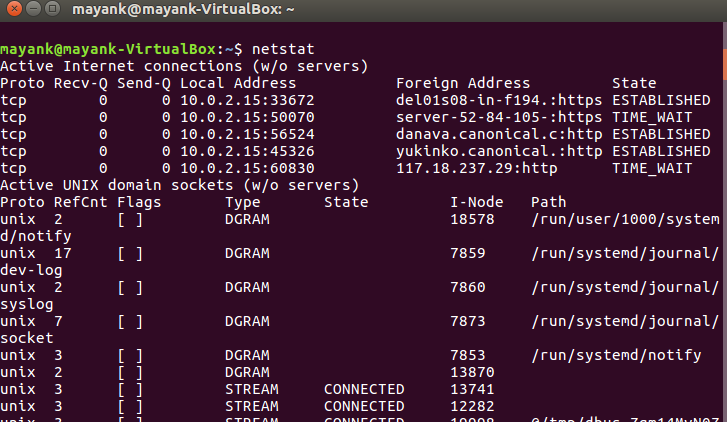
Command-line tools are the first step in any network troubleshooting process. While ping is great for checking reachability, other tools provide deeper insights. The dig (Domain Information Groper) command is a powerful utility for querying the DNS Protocol, which is the phonebook of the internet.
For example, you can use dig to look up not just the IP address (A record) of a domain, but also its mail servers (MX records) or custom informational records (TXT records), which are often used for domain verification.
# Look up the IPv4 address (A record) for example.com
dig A example.com +short

# Look up the mail exchange (MX) records for google.com
dig MX google.com +short

# Look up the text (TXT) records, often used for SPF or domain verification
dig TXT google.com +short
This level of inspection is crucial for everything from setting up email correctly to performing initial reconnaissance in a security audit.
Crafting Custom Network Tools with Python
While command-line tools are powerful, the real flexibility comes from writing your own scripts to automate tasks and create custom tools. Python, with its extensive standard library and rich ecosystem, is an excellent choice for Network Programming.
A Simple TCP Port Scanner
At the heart of most network programming is the concept of a socket. A socket is an endpoint for sending or receiving data across a computer network. Using Python’s built-in socket library, we can create a simple tool to check if a specific port is open on a remote server. This is useful for checking if a service (like a web server on port 80 or a database on port 5432) is running and accessible.
import socket
import sys

def check_port(host, port):
    """
    Attempts to connect to a specific host and port.
    Returns True if the port is open, False otherwise.
    """
    # Create a new socket using the AF_INET address family (IPv4)
    # and the SOCK_STREAM socket type (TCP)
    try:
        with socket.socket(socket.AF_INET, socket.SOCK_STREAM) as s:
            # Set a timeout to avoid waiting indefinitely
            s.settimeout(1.0)
            # Attempt to connect to the host and port
            s.connect((host, port))
            print(f"[+] Port {port} on {host} is open.")
            return True
    except (socket.timeout, ConnectionRefusedError):
        print(f"[-] Port {port} on {host} is closed.")
        return False
    except socket.gaierror:
        print(f"[!] Hostname {host} could not be resolved.")
        return False
    except Exception as e:
        print(f"[!] An error occurred: {e}")
        return False

if __name__ == "__main__":
    if len(sys.argv) != 3:
        print("Usage: python port_scanner.py <host> <port>")
        sys.exit(1)

    target_host = sys.argv[1]
    try:
        target_port = int(sys.argv[2])
        check_port(target_host, target_port)
    except ValueError:
        print("Error: Port must be an integer.")
This script demonstrates the fundamental principles of Socket Programming: creating a socket, attempting a connection, and handling the outcome. It’s a basic building block for more complex Network Tools.
Interacting with Web Services: Beyond the Browser
While sockets are powerful for low-level interaction, most modern development involves communicating with web services via the HTTP Protocol. The requests library in Python provides a beautiful, high-level abstraction for this. You can easily send GET, POST, and other requests, handle authentication, and inspect responses, which is fundamental to working with Microservices and third-party APIs.
import requests
import json

def get_api_data(api_url):
    """
    Fetches data from a REST API and prints the headers and body.
    """
    try:
        # Make a GET request to the specified API URL
        response = requests.get(api_url, timeout=5)

        # Raise an exception for bad status codes (4xx or 5xx)
        response.raise_for_status()

        print("--- Response Headers ---")
        for key, value in response.headers.items():
            print(f"{key}: {value}")

        print("\n--- Response Body (JSON) ---")
        # The .json() method decodes the JSON response body into a Python dict
        print(json.dumps(response.json(), indent=2))

    except requests.exceptions.RequestException as e:
        print(f"An error occurred during the API request: {e}")
    except json.JSONDecodeError:
        print("Failed to decode JSON from the response.")

if __name__ == "__main__":
    # Using a public test API
    url = "https://jsonplaceholder.typicode.com/posts/1"
    get_api_data(url)
This script is a cornerstone of Network Automation, enabling you to programmatically interact with cloud provider APIs, CI/CD systems, and any other service that exposes a REST API.
Advanced Techniques: Protocol Manipulation and Covert Channels
A deep understanding of network protocols allows for more than just standard communication; it enables manipulation for advanced functionality and, from a security perspective, reveals potential avenues for misuse. This is where the line between a Red Team (offensive security) and Blue Team (defensive security) blurs, as both need to understand these techniques.

Manipulating HTTP Headers for Custom Signaling
HTTP headers are a simple but powerful mechanism for passing metadata along with a request. While standard headers like Content-Type and Authorization are well-known, you can define custom headers (often prefixed with X-) to pass application-specific information. This is common in Microservices and Service Mesh architectures for tasks like distributed tracing (e.g., X-Request-ID) or routing A/B tests.
However, this flexibility can also be used to exfiltrate data or receive commands in a way that might bypass simple security filters. An attacker could encode small pieces of information in custom headers, which would appear as legitimate traffic to a traditional firewall that isn’t performing deep Packet Analysis.
import requests
import base64

def send_covert_request(url, command):
    """
    Sends an HTTP request with a command encoded in a custom header.
    This is a proof-of-concept for educational purposes.
    """
    try:
        # Encode the command to make it less obvious in logs
        encoded_command = base64.b64encode(command.encode('utf-8')).decode('utf-8')

        # Define custom headers
        custom_headers = {
            'User-Agent': 'Legitimate-App-Client/1.0',
            'X-Task-ID': 'a1b2c3d4-e5f6-7890-1234-567890abcdef',
            'X-Command-Data': encoded_command  # The covert channel
        }

        print(f"Sending request to {url} with custom headers:")
        for key, value in custom_headers.items():
            print(f"  {key}: {value}")

        # Send the request
        response = requests.get(url, headers=custom_headers, timeout=5)

        print(f"\nResponse Status Code: {response.status_code}")
        # In a real C2, the response body might contain the command output
        # print(f"Response Body: {response.text[:100]}...")

    except requests.exceptions.RequestException as e:
        print(f"An error occurred: {e}")

if __name__ == "__main__":
    target_url = "https://httpbin.org/get" # A service that echoes requests
    covert_command = "whoami"
    send_covert_request(target_url, covert_command)
This example demonstrates how easily arbitrary data can be piggybacked on seemingly normal HTTPS Protocol traffic. For defenders, this highlights the need for monitoring not just traffic volume but the specifics of API calls, including unexpected or unusually large headers.
Best Practices for Secure and Performant Networking
Whether you’re a developer, a security analyst, or a Digital Nomad trying to get work done from a coffee shop, understanding network best practices is crucial for security and productivity.
For the Developer and DevOps Engineer
In a Cloud Networking environment, the perimeter is porous. Security must be built-in, not bolted on.
- Defense in Depth: Don’t rely solely on a network Firewall. Implement strong API Security with authentication (e.g., OAuth 2.0) and authorization at the application layer. Use mutual TLS (mTLS) within a service mesh to encrypt traffic between services.
- Comprehensive Logging: Log detailed information about network requests, including source IP, user agent, and relevant headers. Effective Network Monitoring is impossible without good data. This is your primary tool for spotting anomalies, like the covert channel described above.
- Network Automation: Use infrastructure-as-code tools like Terraform and configuration management like Ansible to define and enforce network security rules. This reduces human error and ensures consistency in complex environments like those managed with Software-Defined Networking (SDN).
For the Digital Nomad and Remote Worker
For those who rely on public networks, personal network security is paramount. The rise of Remote Work and Travel Tech makes this more relevant than ever.
- Use a VPN: A Virtual Private Network (VPN) encrypts all your traffic, creating a secure tunnel between your device and a trusted server. This is non-negotiable when using untrusted public WiFi.
- Troubleshoot Your Connection: Is your video call lagging? High Latency could be the culprit. Use
pingto check the round-trip time to a known server (likeping 8.8.8.8). Usetracerouteto see if there’s a problematic hop in the network path between you and your destination. These basic Network Commands can save hours of frustration.
Conclusion: The Enduring Importance of Network Fundamentals
We’ve journeyed from the foundational layers of the TCP/IP model to the practicalities of writing Python scripts that interact with APIs and the advanced concept of using legitimate protocols for covert communication. The key takeaway is that network commands and protocols are not a black box. They are a tangible, programmable system that underpins all modern software. For developers, a deep understanding leads to more resilient and performant applications. For security professionals, it’s the key to defending against and detecting the next generation of threats that blend in with legitimate traffic.
In an era of increasing complexity with Cloud Networking, Edge Computing, and distributed architectures, these fundamental skills have become more critical than ever. Don’t just use the tools; take the time to learn the language of the network. Write a port scanner, build a simple HTTP client from scratch with sockets, and analyze traffic with Wireshark. This hands-on exploration will provide you with the insight and intuition needed to build, troubleshoot, and secure the connected systems of tomorrow.