


The internet’s explosive growth has been one of the defining technological achievements of our time. This expansion, however, has pushed its foundational addressing system, Internet Protocol version 4 (IPv4), to its absolute limit. With the proliferation of IoT devices, cloud services, and a globally connected population, the 4.3 billion addresses offered by IPv4 are simply not enough. Enter IPv6, the next-generation protocol designed not just to solve the address exhaustion problem but to fundamentally improve how our networks operate. For developers, network engineers, and anyone involved in modern system administration, understanding IPv6 is no longer optional—it’s a critical skill for building scalable, secure, and future-proof systems. This protocol is the backbone that will support everything from advanced Cloud Networking to the seamless connectivity required by a digital nomad leveraging the latest in travel tech. This article provides a deep dive into the architecture, implementation, and best practices of IPv6, complete with practical code examples to bridge theory and practice.
Understanding the Core of IPv6: More Than Just a Bigger Address
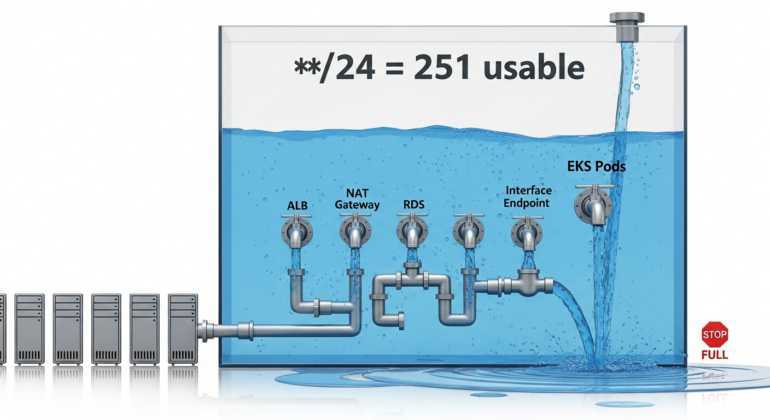
At first glance, the most striking feature of IPv6 is its immense address space. While IPv4 uses a 32-bit address, IPv6 utilizes a 128-bit address structure. This expands the number of possible addresses from roughly 4.3 billion to 340 undecillion (3.4 x 10^38)—a number so vast it’s often said we can assign a unique IPv6 address to every atom on the surface of the Earth. But the improvements go far beyond just size, touching the very core of network protocols and network design.
The IPv6 Address Architecture
An IPv6 address is represented as eight groups of four hexadecimal digits, separated by colons. For example: 2001:0db8:85a3:0000:0000:8a2e:0370:7334. To make these long addresses more manageable, IPv6 includes two important shortening rules:
- Leading Zero Omission: Any leading zeros within a group can be removed. For example,
0db8becomesdb8, and0000becomes0. - Consecutive Zero Compression: A single, contiguous block of all-zero groups can be replaced with a double colon (
::). This can only be done once per address to avoid ambiguity.
Applying these rules, our example address can be shortened to 2001:db8:85a3::8a2e:370:7334. This simplified notation is crucial for anyone working in network administration or DevOps networking. Key address types in this new network addressing scheme include Global Unicast (publicly routable), Link-Local (for communication on a single network segment), and Multicast (for one-to-many communication).
Practical Address Validation with Python
When developing applications, you often need to validate user input or parse configuration files containing IP addresses. Python’s built-in ipaddress library provides a powerful and convenient way to handle both IPv4 and IPv6 addresses, making it an essential part of any developer’s network programming toolkit.
Here is a simple Python script to check if a given string is a valid IPv6 address.
import ipaddress

def is_valid_ipv6(address_string):
    """
    Validates if a given string is a valid IPv6 address.

    Args:
        address_string (str): The string to validate.

    Returns:
        bool: True if the string is a valid IPv6 address, False otherwise.
    """
    try:
        ip = ipaddress.ip_address(address_string)
        # Check if the parsed address is an instance of IPv6Address
        if isinstance(ip, ipaddress.IPv6Address):
            print(f"'{address_string}' is a valid IPv6 address.")
            print(f"  - Compressed: {ip.compressed}")
            print(f"  - Exploded: {ip.exploded}")
            print(f"  - Is Global: {ip.is_global}")
            print(f"  - Is Link-Local: {ip.is_link_local}")
            return True
        else:
            print(f"'{address_string}' is a valid IP address, but not IPv6.")
            return False
    except ValueError:
        print(f"'{address_string}' is not a valid IP address.")
        return False

# --- Test Cases ---
is_valid_ipv6("2001:db8:85a3::8a2e:370:7334") # Valid and compressed
is_valid_ipv6("fe80::1ff:fe23:4567:890a")      # Valid link-local
is_valid_ipv6("2001:0db8:85a3:0000:0000:8a2e:0370:7334") # Valid and exploded
is_valid_ipv6("192.168.1.1")                  # Valid IPv4, but not IPv6
is_valid_ipv6("2001:db8::gabc")               # Invalid (contains non-hex character)
is_valid_ipv6("2001::db8::1")                 # Invalid (double '::')
Putting IPv6 to Work: From Packet Headers to Network Configuration
The design of IPv6 incorporates lessons learned from decades of running the internet on IPv4. This has resulted in a more efficient and streamlined protocol at the Network Layer of the OSI Model, simplifying the job of network devices like routers and improving overall network performance.
The Streamlined IPv6 Header
The IPv6 header is simpler and more efficient than its IPv4 counterpart. It has a fixed size of 40 bytes and fewer fields, which allows for faster processing by networking hardware. Non-essential and optional fields from the IPv4 header have been moved to “Extension Headers” that are placed between the main header and the payload. This design means that routers in the middle of a path don’t need to process complex options, reducing latency. This streamlined approach is a core part of the TCP/IP protocol suite’s evolution and is a frequent topic in packet analysis with tools like Wireshark.
Automatic Configuration: SLAAC and DHCPv6
One of the most significant operational benefits of IPv6 is Stateless Address Autoconfiguration (SLAAC). With SLAAC, a device can automatically configure its own unique IPv6 address without needing a central server. It does this by listening for Router Advertisement (RA) messages on the local network to learn the network prefix and then combining it with its own MAC address (converted to EUI-64 format) to form a complete, globally unique address. This greatly simplifies network administration. For environments requiring more control, DHCPv6 (the stateful counterpart) is also available to assign addresses and other configuration options, similar to how DHCP works in IPv4.
IPv4 and IPv6 Coexistence
The transition to an IPv6-only internet will be a long one. For the foreseeable future, most networks will operate in a “dual-stack” mode, where devices have both an IPv4 and an IPv6 address. This is the most common and robust transition mechanism. You can check your own machine’s configuration using common network commands.
On Windows, use ipconfig, and on macOS/Linux, use ifconfig or ip addr.
# On Linux/macOS
ip addr show eth0

# Example Output:
# 2: eth0: <BROADCAST,MULTICAST,UP,LOWER_UP> mtu 1500 qdisc fq_codel state UP group default qlen 1000
#     link/ether 00:1a:2b:3c:4d:5e brd ff:ff:ff:ff:ff:ff
#     inet 192.168.1.101/24 brd 192.168.1.255 scope global dynamic noprefixroute eth0
#        valid_lft 78426sec preferred_lft 78426sec
#     inet6 2001:db8:1:1:21a:2bff:fe3c:4d5e/64 scope global dynamic mngtmpaddr noprefixroute
#        valid_lft 2591997sec preferred_lft 604797sec
#     inet6 fe80::21a:2bff:fe3c:4d5e/64 scope link noprefixroute
#        valid_lft forever preferred_lft forever
In the output above, inet shows the IPv4 address, while inet6 shows the global and link-local IPv6 addresses for the same interface.
Advanced IPv6: Security, Socket Programming, and Network Automation
Beyond the basics, IPv6 introduces capabilities that are critical for modern network architecture, including enhanced security and native support for the kind of dynamic environments seen in microservices and Software-Defined Networking (SDN).
Built-in Security with IPsec
A significant advantage of IPv6 is that support for IPsec (Internet Protocol Security) is a mandatory part of the protocol specification. IPsec provides a framework for authentication and encryption at the IP packet level, forming the basis for many VPN solutions. While its implementation is not always enabled by default, having it as a core part of the protocol’s design greatly enhances network security by allowing for end-to-end protection without relying solely on the Application Layer (e.g., HTTPS Protocol).
Network Programming with IPv6 Sockets
Writing applications that can communicate over IPv6 is straightforward using standard socket programming libraries. The primary change from IPv4 is specifying the correct address family. Here’s a simple TCP server and client in Python demonstrating IPv6 communication. This is a fundamental skill for network development.
IPv6 TCP Server:
import socket

HOST = "::"  # Listen on all available IPv6 interfaces
PORT = 65432
BUFFER_SIZE = 1024

# Use AF_INET6 for IPv6
with socket.socket(socket.AF_INET6, socket.SOCK_STREAM) as s:
    s.bind((HOST, PORT))
    s.listen()
    print(f"Server listening on [{HOST}]:{PORT}")

    conn, addr = s.accept()
    with conn:
        print(f"Connected by {addr}")
        while True:
            data = conn.recv(BUFFER_SIZE)
            if not data:
                break
            print(f"Received: {data.decode()}")
            conn.sendall(b"Message received")
IPv6 TCP Client:
import socket

# Use '::1' for localhost in IPv6
HOST = "::1"
PORT = 65432
BUFFER_SIZE = 1024

with socket.socket(socket.AF_INET6, socket.SOCK_STREAM) as s:
    try:
        s.connect((HOST, PORT))
        s.sendall(b"Hello, IPv6 world")
        data = s.recv(BUFFER_SIZE)
        print(f"Server responded: {data.decode()}")
    except ConnectionRefusedError:
        print(f"Connection to [{HOST}]:{PORT} was refused.")
IPv6 in Modern Architectures
The vast address space of IPv6 is a game-changer for network virtualization and containerization. In a cloud or microservices environment, every container or virtual machine can be assigned a unique, publicly routable IPv6 address. This eliminates the need for complex and stateful Network Address Translation (NAT) gateways, simplifying network design, improving performance, and making peer-to-peer communication between services seamless. This is especially relevant for technologies like Service Mesh and Edge Computing. Furthermore, network automation tools can leverage Network APIs to programmatically assign and manage these addresses at scale.
Best Practices for IPv6 Adoption and Optimization
Successfully deploying IPv6 requires a shift in thinking away from the scarcity mindset of IPv4. A well-planned rollout ensures security, scalability, and ease of management.
Planning Your IPv6 Addressing Scheme
Don’t treat IPv6 subnets like precious IPv4 resources. The standard practice is to assign a /48 prefix to an entire site or organization and a /64 to each individual subnet or VLAN. This hierarchical approach, based on CIDR principles, provides immense flexibility for future growth and simplifies routing logic. A good addressing plan is the foundation of a solid network architecture.
Security Considerations
With IPv6, every device can potentially have a public IP address, which means the perceived “security” of NAT is gone. This isn’t a weakness; it’s a return to the internet’s original end-to-end principle. However, it mandates the use of properly configured, stateful firewalls that inspect traffic and block unsolicited incoming connections by default. Additionally, it’s critical not to block all ICMPv6 traffic, as protocols like Neighbor Discovery Protocol (NDP) rely on it for basic network functionality.
Monitoring and Troubleshooting
Effective network monitoring and network troubleshooting are essential. Most standard network tools have IPv6-aware counterparts. For instance, you’ll use ping6 and traceroute6 (or simply ping -6 and traceroute -6 on some systems) to test connectivity.
# Pinging Google's public DNS over IPv6
ping6 2001:4860:4860::8888

# On some systems, the flag is preferred
ping -6 google.com
For deeper inspection, Wireshark offers comprehensive IPv6 packet dissection capabilities, allowing you to analyze everything from basic connectivity to complex protocol interactions.
Conclusion: Embracing the Future of Networking
IPv6 is more than an incremental update; it is a fundamental redesign of the internet’s core addressing protocol, built for the demands of the 21st century. It provides the near-limitless address space required for the future of IoT, remote work, and global connectivity. Its streamlined header improves performance, while features like SLAAC and mandatory IPsec support simplify administration and enhance security. For developers, understanding IPv6 socket programming is key to building modern, resilient applications. For network engineers and DevOps professionals, mastering IPv6 addressing, routing, and security is essential for designing the next generation of scalable and efficient networks. The transition is well underway, and the time to build expertise, test deployments, and begin a strategic adoption of IPv6 is now. It is the bedrock upon which the future of digital communication will be built.