

Introduction: The Digital Glue of the Modern World
In our interconnected world, from a simple weather app on your phone to complex, AI-driven platforms running on massive cloud infrastructure, a powerful and invisible force is at work: web services. These are the fundamental building blocks of modern software, the digital glue that allows disparate applications, written in different languages and running on different systems, to communicate and share data seamlessly. At its core, a web service is a standardized method of communication between two electronic devices over a network, typically the internet. This elegant concept has revolutionized software development, enabling the rise of modular, scalable, and distributed systems. It’s the engine behind everything from mobile banking and e-commerce to the complex data pipelines required for large-scale AI. Understanding web services is no longer optional; it’s an essential skill for any developer, network engineer, or system administrator looking to build robust and future-proof applications. This article will take you on a comprehensive journey through the world of web services, from their foundational concepts and architectural patterns to advanced implementation techniques and best practices for security and performance.
Section 1: The Core Concepts and Architectural Styles
To truly grasp the power of web services, we must first understand the underlying principles and the evolution of the architectural styles that govern them. This journey begins at the Application Layer of the OSI Model, where protocols like the HTTP Protocol define the rules of engagement for data exchange.
The Evolution: From SOAP to REST and GraphQL
The landscape of web services has evolved significantly over the years, driven by the need for greater flexibility, performance, and ease of use.
- SOAP (Simple Object Access Protocol): One of the earliest widely adopted standards, SOAP is a highly structured, protocol-based approach that relies heavily on XML for its message format. It has a rigid specification, defining everything from the message structure to the operations, often using a Web Services Description Language (WSDL) file as a contract. While robust and secure, its verbosity and complexity have led to a decline in its popularity for new public-facing APIs.
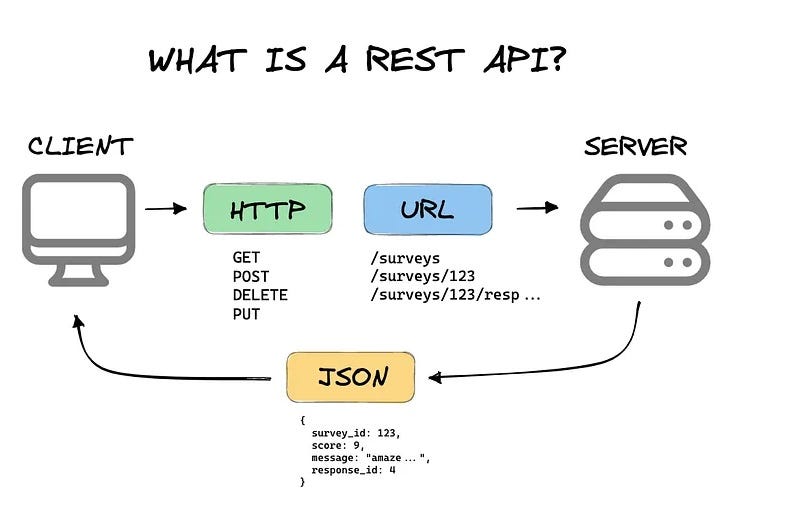
- REST (Representational State Transfer): REST is not a protocol but an architectural style that has become the de facto standard for building web services. It leverages the existing infrastructure of the web, primarily the HTTP Protocol. RESTful services are stateless, meaning each request from a client to a server must contain all the information needed to understand and complete the request. It uses standard HTTP methods (GET, POST, PUT, DELETE) to perform operations on “resources,” which are identified by URIs. Its simplicity and use of lightweight data formats like JSON have made it incredibly popular.
- GraphQL: Developed by Facebook and now open-sourced, GraphQL is a query language for APIs and a runtime for fulfilling those queries with your existing data. Unlike REST, which often requires multiple endpoints to fetch related data, GraphQL allows the client to request exactly what it needs in a single query, preventing the common problems of over-fetching (getting more data than needed) and under-fetching (having to make multiple calls to get all required data).
A Simple REST API with Python and Flask
Let’s illustrate the simplicity of REST with a practical example. Using Python and the Flask micro-framework, we can create a basic web service endpoint in just a few lines of code. This service will return a list of travel destinations, a common use case in the Travel Tech industry.
# app.py
from flask import Flask, jsonify

# Initialize the Flask application
app = Flask(__name__)

# Sample data - in a real app, this would come from a database
destinations = [
    {
        "id": 1,
        "city": "Kyoto",
        "country": "Japan",
        "description": "Famous for its classical Buddhist temples, as well as gardens, imperial palaces, Shinto shrines and traditional wooden houses."
    },
    {
        "id": 2,
        "city": "Lisbon",
        "country": "Portugal",
        "description": "A hilly, coastal capital city with pastel-colored buildings, a historic tram system, and a vibrant Fado music scene."
    }
]

# Define a route for the /destinations endpoint
@app.route('/api/v1/destinations', methods=['GET'])
def get_destinations():
    # jsonify converts the Python dictionary list to a JSON response
    return jsonify(destinations)

# Run the app
if __name__ == '__main__':
    # Listens on localhost, port 5000
    app.run(debug=True)
When you run this script and navigate to http://127.0.0.1:5000/api/v1/destinations in your browser or using a tool like Postman, the server will respond with a JSON array of the travel destinations. This demonstrates the core of REST: a client makes an HTTP GET request to a specific URL, and the server returns a representation of the requested resource.
Section 2: Implementation and Consumption in a Polyglot World
Web services are language-agnostic, which is one of their greatest strengths. A service written in Java can be easily consumed by a client application written in JavaScript, Swift, or any other language. This section explores building a slightly more structured service and then consuming it from a client.
Server-Side Implementation with Java and Spring Boot
Spring Boot is a dominant framework in the Java ecosystem for building robust, production-grade web services, including REST APIs and Microservices. Let’s recreate our travel destination service using Spring Boot to see how a more structured, enterprise-level framework handles the same task.
// Destination.java - A simple POJO (Plain Old Java Object) to represent our data
public class Destination {
    private int id;
    private String city;
    private String country;
    // Getters and setters omitted for brevity...
}

// DestinationController.java - The REST controller that defines the endpoints
import org.springframework.web.bind.annotation.GetMapping;
import org.springframework.web.bind.annotation.RequestMapping;
import org.springframework.web.bind.annotation.RestController;
import java.util.Arrays;
import java.util.List;

@RestController
@RequestMapping("/api/v1/destinations")
public class DestinationController {

    @GetMapping
    public List<Destination> getAllDestinations() {
        // In a real application, this data would be fetched from a service layer connected to a database
        return Arrays.asList(
            new Destination(1, "Kyoto", "Japan"),
            new Destination(2, "Lisbon", "Portugal")
        );
    }
}
While requiring a bit more boilerplate, the Spring Boot version provides a strong structure, dependency injection, and a clear separation of concerns, which is crucial for building and maintaining large-scale applications. The underlying principles of Network Architecture remain the same: an HTTP request is mapped to a controller method, which processes the request and returns data that is automatically serialized to JSON.
Client-Side Consumption with JavaScript
Now that we have a server providing data, let’s see how a client—such as a web browser—would consume it. The modern way to do this in JavaScript is with the Fetch API, a powerful and flexible interface for making network requests.
// script.js - Consuming the API from a web page

const apiUrl = 'http://localhost:8080/api/v1/destinations'; // Assuming Spring Boot runs on port 8080

async function fetchDestinations() {
  try {
    const response = await fetch(apiUrl);

    // Check if the request was successful (status code 200-299)
    if (!response.ok) {
      throw new Error(`HTTP error! Status: ${response.status}`);
    }

    const destinations = await response.json();
    console.log('Successfully fetched destinations:', destinations);

    // Here you would typically update the UI with the fetched data
    displayDestinations(destinations);

  } catch (error) {
    console.error('Could not fetch destinations:', error);
  }
}

function displayDestinations(destinations) {
  const listElement = document.getElementById('destination-list');
  listElement.innerHTML = ''; // Clear previous content
  destinations.forEach(dest => {
    const item = document.createElement('li');
    item.textContent = `${dest.city}, ${dest.country}`;
    listElement.appendChild(item);
  });
}

// Call the function to fetch and display the data when the page loads
fetchDestinations();
This snippet demonstrates a complete client-server interaction over the network. The client sends a request, the server processes it, and the client receives and displays the response. This fundamental pattern of Computer Networking powers the vast majority of dynamic web applications today.
Section 3: Advanced Architectures and Modern Concepts
As applications grow in complexity, so do the architectures that support them. Modern web service development involves more than just creating simple endpoints; it encompasses security, scalability, and maintainability through advanced patterns and tools.
From Monolith to Microservices
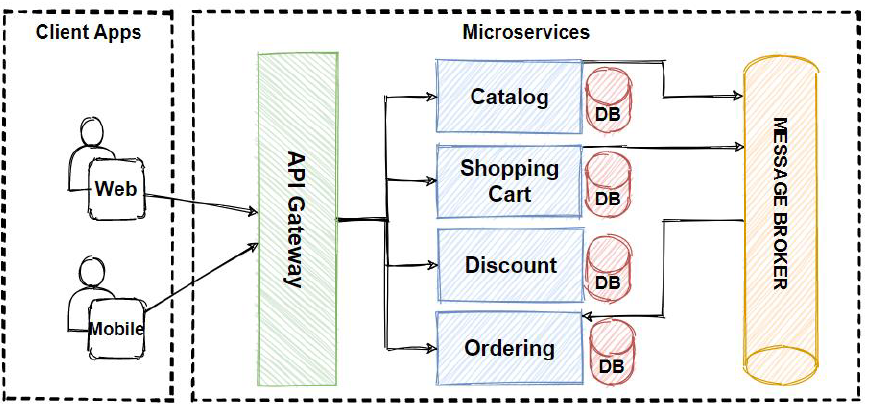
The microservice architecture is a design approach where a single, large application (a monolith) is broken down into a collection of smaller, independently deployable services. Each service is self-contained, responsible for a specific business capability, and communicates with others over a network, typically via REST APIs or message queues. This approach offers several advantages:
- Scalability: Individual services can be scaled independently based on demand.
- Resilience: Failure in one service doesn’t necessarily bring down the entire application.
- Technology Diversity: Teams can choose the best technology stack for their specific service.
However, this introduces significant complexity in DevOps Networking, service discovery, and distributed data management. A Network Engineer working in this environment must have a deep understanding of Cloud Networking and Network Virtualization.
Securing Your Web Services: API Security
Network Security is paramount. Publicly exposed web services are a primary target for attackers. Key API Security practices include:
- Use HTTPS Protocol: Always encrypt data in transit using TLS/SSL to prevent eavesdropping.
- Authentication: Verify the identity of the client. Common standards include OAuth 2.0 for delegated access and JSON Web Tokens (JWTs) for stateless authentication.
- Authorization: Ensure the authenticated client has permission to perform the requested action (e.g., a user can only view their own data).
- Input Validation: Never trust client input. Sanitize and validate all incoming data to prevent injection attacks (SQLi, XSS).
- Rate Limiting: Protect your service from denial-of-service (DoS) attacks and abuse by limiting the number of requests a client can make in a given time frame.
The Efficiency of GraphQL
For applications with complex data models, like social networks or content management systems, GraphQL offers a compelling alternative to REST. Let’s define a simple GraphQL schema for our travel example.
# schema.graphql

# Defines a Destination type with its fields
type Destination {
  id: ID!
  city: String!
  country: String!
  description: String
  attractions: [Attraction]
}

# Defines an Attraction type
type Attraction {
  id: ID!
  name: String!
  category: String
}

# Defines the queries available to the client
type Query {
  allDestinations: [Destination]
  destination(id: ID!): Destination
}
With this schema, a client can now make a very specific query to get exactly the data it needs. For example, to get just the city names and their top attraction, the query would look like this:
{ allDestinations { city, attractions(limit: 1) { name } } }
This level of control significantly improves Network Performance by reducing the amount of data transferred over the network, which is especially beneficial for mobile clients with limited Bandwidth.
Section 4: Best Practices for Performance and Reliability
Building a functional web service is one thing; building one that is fast, reliable, and scalable is another. This requires a focus on performance optimization and robust operational practices.
Optimizing for Speed and Scale
Performance is a feature. Slow services lead to poor user experiences and can impact business outcomes. Key optimization strategies include:
- Caching: Store frequently accessed data in a temporary, high-speed storage layer (like Redis or Memcached) to avoid expensive database lookups. Caching can be implemented at various levels: database, application, or edge (using a CDN – Content Delivery Network).
- Load Balancing: Distribute incoming traffic across multiple instances of your service. This not only improves performance but also enhances reliability by eliminating single points of failure.
- Asynchronous Operations: For long-running tasks like sending an email or processing a video, offload the work to a background queue instead of making the client wait for the task to complete.
- Database Optimization: Ensure your database queries are efficient, use proper indexing, and avoid unnecessary joins.
Ensuring Uptime: Monitoring and Troubleshooting
You can’t fix what you can’t see. Comprehensive Network Monitoring is crucial for maintaining a healthy service. This involves:
- Logging: Collect structured logs from your application to trace requests and diagnose errors.
- Metrics: Track key performance indicators (KPIs) like request rate, error rate, and Latency. Tools like Prometheus and Grafana are industry standards for collecting and visualizing these metrics.
- Health Checks: Expose a dedicated endpoint (e.g.,
/health) that load balancers and orchestration systems (like Kubernetes) can use to verify that your service is running correctly. - Network Troubleshooting: For deep-seated issues, a System Administration or DevOps professional might use Network Tools like
ping,traceroute, or even perform Packet Analysis with Wireshark to diagnose problems at the TCP/IP level.
Conclusion: The Future of Connected Systems
Web services are the bedrock of modern application development, enabling everything from simple mobile apps to globally distributed, AI-powered platforms. We’ve journeyed from the foundational concepts of REST and its predecessors to the advanced, scalable architectures of microservices and the data-fetching efficiency of GraphQL. We’ve seen how to build them with popular frameworks like Flask and Spring Boot and how to secure and optimize them for performance and reliability. As technologies like Edge Computing and Software-Defined Networking (SDN) continue to evolve, the role of well-designed, secure, and efficient web services will only become more critical. For developers and engineers, mastering these concepts is the key to building the next generation of innovative, interconnected applications that can scale to meet any demand.