


In the rapidly evolving landscape of Computer Networking, the interface between software and infrastructure has shifted dramatically. Gone are the days when network configuration required manual CLI commands on individual routers. Today, Network APIs (Application Programming Interfaces) serve as the fundamental connective tissue of the modern internet, bridging the gap between traditional Web2 architectures and the emerging decentralized logic of Web3 and AI agents. Whether you are a Network Engineer transitioning into DevOps Networking or a developer building high-performance distributed systems, understanding the depth of network programmability is essential.
This article provides a comprehensive exploration of Network APIs, moving from the foundational OSI Model layers to advanced Software-Defined Networking (SDN) and verified inference. We will examine how APIs facilitate everything from basic HTTP Protocol requests to complex interactions involving Smart Contracts and autonomous agents. By mastering these concepts, professionals can optimize Network Performance, enhance Network Security, and build resilient infrastructure capable of supporting the next generation of digital applications.
1. Foundations of Network Programmability: The Application Layer and Beyond
To understand Network APIs, one must first revisit the Network Architecture that supports them. While the physical transmission of data relies on Ethernet, Network Cables, and Wireless Networking (WiFi), the logical interaction happens primarily at the Application Layer and Transport Layer of the OSI model. Historically, System Administration involved manual configuration. Today, we abstract these complexities using APIs.
REST, GraphQL, and the Evolution of Web Services
The standard for Web Services for the past decade has been REST API (Representational State Transfer). REST relies heavily on the HTTP Protocol and HTTPS Protocol, utilizing standard methods like GET, POST, PUT, and DELETE. It is stateless and cacheable, making it ideal for Cloud Networking and microservices.
However, as applications became more data-hungry, GraphQL emerged to solve the issue of over-fetching data. Unlike REST, which might require multiple round-trips (increasing Latency), GraphQL allows the client to specify exactly what data is needed in a single request. This is particularly crucial for mobile devices or Remote Work scenarios where Bandwidth might be constrained.
Practical Example: Interacting with Network Monitoring APIs
Let’s look at a practical example using Python. In modern Network Monitoring, we often use APIs to query the status of devices rather than relying solely on SNMP. The following code demonstrates how to interact with a RESTful endpoint to retrieve network telemetry data, a common task for a Network Engineer automating health checks.
import requests
import json
import time

def check_network_health(api_endpoint, api_key):
    """
    Polls a Network API endpoint to check device latency and packet loss.
    """
    headers = {
        "Authorization": f"Bearer {api_key}",
        "Content-Type": "application/json"
    }

    try:
        response = requests.get(f"{api_endpoint}/telemetry/status", headers=headers, timeout=5)
        response.raise_for_status()

        data = response.json()

        # Analyze metrics
        latency_ms = data.get("latency_ms", 0)
        packet_loss = data.get("packet_loss_percent", 0.0)

        print(f"Device: {data.get('hostname')}")
        print(f"Status: {data.get('status')}")
        print(f"Latency: {latency_ms}ms | Packet Loss: {packet_loss}%")

        if latency_ms > 100 or packet_loss > 1.0:
            print("WARNING: Network Performance degradation detected.")
            # Trigger alert logic here

    except requests.exceptions.HTTPError as errh:
        print(f"Http Error: {errh}")
    except requests.exceptions.ConnectionError as errc:
        print(f"Error Connecting: {errc}")
    except requests.exceptions.Timeout as errt:
        print(f"Timeout Error: {errt}")

# Example Usage
if __name__ == "__main__":
    API_URL = "https://api.network-monitor.local/v1"
    API_KEY = "sk_live_5544332211"

    print("Starting Network Health Check...")
    check_network_health(API_URL, API_KEY)
This script highlights the ease of Network Automation. Instead of manually logging into Routers or Switches via SSH, the script consumes structured JSON data, allowing for immediate integration into dashboarding tools or alerting systems.
2. Software-Defined Networking (SDN) and Infrastructure as Code
Moving deeper into the infrastructure, Software-Defined Networking (SDN) has revolutionized Network Design. SDN separates the control plane (decision making) from the data plane (packet forwarding). This separation allows administrators to program the network centrally via Network APIs rather than configuring individual boxes.
Automating the Network Layer
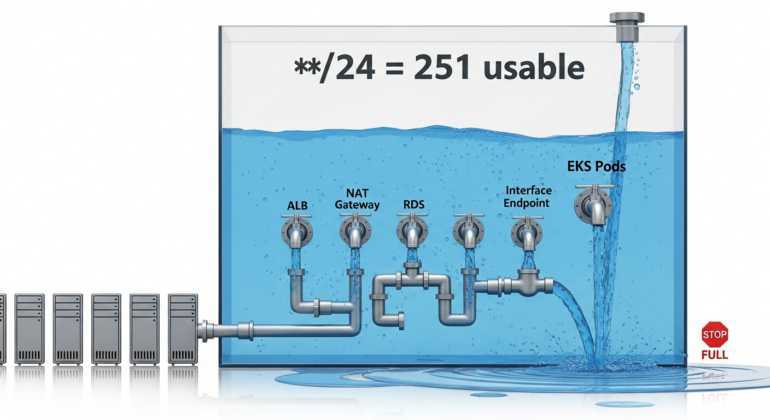
In an SDN environment, Network Virtualization allows for the creation of dynamic network segments. This is critical for Cloud Networking providers where tenants need isolated environments (VPCs). The underlying technology often relies on IPv4 and IPv6 addressing, Subnetting, and CIDR (Classless Inter-Domain Routing) blocks that are assigned programmatically.
For DevOps Networking professionals, tools like Ansible or Terraform interact with these APIs. However, direct Network Programming using libraries like `netmiko` or `ncclient` (for NETCONF) provides granular control over legacy and modern devices.
Practical Example: Configuring ACLs via API
Security is paramount. Firewalls and Access Control Lists (ACLs) must be updated dynamically to respond to threats. The following Python snippet demonstrates how one might push a security configuration to a network device using a hypothetical API wrapper, ensuring that Network Security policies are applied consistently.
from netmiko import ConnectHandler

def update_firewall_rules(device_info, blocked_ips):
    """
    Connects to a network device and updates ACLs to block specific IPs.
    Demonstrates Network Automation over SSH/CLI when REST APIs aren't available.
    """
    try:
        net_connect = ConnectHandler(**device_info)
        net_connect.enable()

        config_commands = []
        for ip in blocked_ips:
            # creating a standard ACL entry
            cmd = f"access-list 101 deny ip host {ip} any"
            config_commands.append(cmd)

        # Allow all other traffic
        config_commands.append("access-list 101 permit ip any any")

        output = net_connect.send_config_set(config_commands)
        print("Configuration applied successfully:")
        print(output)

        # Save configuration
        net_connect.save_config()
        net_connect.disconnect()

    except Exception as e:
        print(f"Failed to configure device: {e}")

# Device definition
cisco_router = {
    'device_type': 'cisco_ios',
    'host': '192.168.1.1',
    'username': 'admin',
    'password': 'securepassword',
    'secret': 'enablepassword',
}

# List of malicious IPs identified by Packet Analysis
threat_intel_ips = ["203.0.113.5", "198.51.100.22"]

if __name__ == "__main__":
    update_firewall_rules(cisco_router, threat_intel_ips)
This example bridges the gap between Network Tools like Wireshark (which might identify the malicious IPs via Packet Analysis) and the actual enforcement on the hardware.
3. Advanced Architectures: Web3, Agents, and Edge Computing
The frontier of Network APIs lies in the integration of Web3 technologies and Artificial Intelligence. As we move toward Edge Computing and Service Mesh architectures, the network is no longer just a pipe; it is a computational layer. This is where concepts like verified inference and AI-secured chains come into play.
The Convergence of AI and Blockchain Networking
Modern applications are beginning to utilize APIs that do more than fetch data; they perform reasoning. An AI agent might use a set of APIs to research a topic, process the data, and store the result on a decentralized ledger (like an SVM-compatible chain). This ensures that the “thought process” of the AI is verifiable.

In this context, Network APIs act as the interface between the deterministic world of Smart Contracts and the probabilistic world of AI. This requires robust API Design to handle asynchronous tasks, cryptographic signing, and high-throughput data streams.
Practical Example: Asynchronous Agent Interaction
Below is a JavaScript (Node.js) example simulating an interaction where an application requests an AI agent to process data and commit the result to a decentralized network. This utilizes concepts of Socket Programming and asynchronous handling common in Microservices.
const https = require('https');
const crypto = require('crypto');

// Simulate a request to a decentralized AI Agent Network
async function requestVerifiedInference(prompt, networkNodeUrl) {

    const payload = JSON.stringify({
        action: "process_and_store",
        input: prompt,
        constraints: {
            model: "llama-optimized",
            verification_level: "consensus"
        },
        timestamp: Date.now()
    });

    const options = {
        hostname: networkNodeUrl,
        port: 443,
        path: '/api/v1/agent/inference',
        method: 'POST',
        headers: {
            'Content-Type': 'application/json',
            'Content-Length': payload.length,
            'X-Client-Signature': crypto.createHmac('sha256', 'secret').update(payload).digest('hex')
        }
    };

    return new Promise((resolve, reject) => {
        const req = https.request(options, (res) => {
            let data = '';

            res.on('data', (chunk) => {
                data += chunk;
            });

            res.on('end', () => {
                if (res.statusCode >= 200 && res.statusCode < 300) {
                    try {
                        const parsed = JSON.parse(data);
                        resolve(parsed);
                    } catch (e) {
                        reject("Failed to parse response");
                    }
                } else {
                    reject(`Request failed with status: ${res.statusCode}`);
                }
            });
        });

        req.on('error', (error) => {
            reject(error);
        });

        req.write(payload);
        req.end();
    });
}

// Execution
(async () => {
    try {
        console.log("Initiating AI Agent request on the network...");
        const result = await requestVerifiedInference(
            "Analyze network traffic patterns for anomaly detection",
            "api.decentralized-compute.network"
        );

        console.log("Inference Complete.");
        console.log(`Transaction Hash: ${result.tx_hash}`);
        console.log(`Verified Output: ${result.output_summary}`);

    } catch (error) {
        console.error("Network Interaction Failed:", error);
    }
})();
4. Best Practices and Network Optimization
Whether building for Travel Tech platforms serving Digital Nomads or enterprise financial systems, adhering to best practices in Network Development is non-negotiable. Poorly designed APIs can lead to Network Troubleshooting nightmares and security vulnerabilities.
Security and Access Control
API Security is a subset of broader Network Security. Always enforce HTTPS (TLS) to encrypt data in transit. Implement Rate Limiting to prevent DDoS attacks, and use strong authentication mechanisms like OAuth2 or JWT (JSON Web Tokens). When dealing with VPN or internal tools, ensure proper Subnetting and firewall rules restrict access to the API endpoints.
Performance and Load Balancing
To handle high traffic, employ Load Balancing strategies. A CDN (Content Delivery Network) should be used to cache static responses closer to the user, reducing Latency. For backend services, Service Mesh technologies (like Istio or Linkerd) provide observability and traffic management between microservices.
Socket Programming for Real-Time Data
For applications requiring real-time updates (like chat apps or live trading tickers), standard HTTP requests are inefficient. Socket Programming (WebSockets) maintains a persistent connection. Below is a conceptual Go (Golang) snippet for a high-performance TCP server, often used in the backend of high-throughput Network APIs.
package main

import (
    "bufio"
    "fmt"
    "net"
    "os"
)

// handleConnection manages a single TCP connection
func handleConnection(c net.Conn) {
    fmt.Printf("Serving %s\n", c.RemoteAddr().String())

    // Create a buffer to read data
    netData, err := bufio.NewReader(c).ReadString('\n')
    if err != nil {
        fmt.Println(err)
        return
    }

    // Process the data (simulating API logic)
    response := fmt.Sprintf("Received: %d bytes. Processing on Edge Node.\n", len(netData))
    c.Write([]byte(response))
    c.Close()
}

func main() {
    arguments := os.Args
    if len(arguments) == 1 {
        fmt.Println("Please provide port number")
        return
    }

    PORT := ":" + arguments[1]
    l, err := net.Listen("tcp", PORT)
    if err != nil {
        fmt.Println(err)
        return
    }
    defer l.Close()

    fmt.Println("High-Performance Network Listener Started...")

    for {
        c, err := l.Accept()
        if err != nil {
            fmt.Println(err)
            return
        }
        // Handle connections concurrently
        go handleConnection(c)
    }
}
Conclusion
The domain of Network APIs has expanded far beyond simple connectivity. It now encompasses a complex ecosystem involving Cloud Networking, SDN, and the emerging capabilities of AI-driven, decentralized protocols. From the Network Engineer automating VLAN assignments to the Travel Photography platform developer optimizing image uploads via Edge Computing, the ability to program the network is a critical skill.
As we look to the future, the integration of verified inference and smart agents into the network stack will redefine how applications interact. We are moving toward a world where the network is not just a passive carrier of data, but an active, intelligent participant in the application logic. To stay ahead, professionals must continue to explore Network Libraries, master Protocol Implementation, and embrace the hybrid world of Web2 and Web3 networking.