


The landscape of Wireless Networking is undergoing a radical transformation. For decades, the primary focus of a Network Engineer was the optimization of macro-scale networks—ensuring reliable Wi-Fi coverage in office buildings, managing Network Architecture for campuses, and securing data transit across the globe. However, as we move further into the era of the Internet of Things (IoT) and bio-integrated technology, the definition of a “network” is shrinking physically while expanding conceptually. We are transitioning from connecting computers to connecting biological systems, leading to the emergence of In-Vivo communications and Nanoscale networking.
This evolution requires a deep understanding of traditional protocols like TCP/IP and the OSI Model, while simultaneously embracing novel standards designed for the human body. Whether you are involved in DevOps Networking, Cloud Networking, or the emerging field of medical telemetry, understanding the full spectrum of wireless technology is essential. This article explores the technical depths of wireless networking, ranging from traditional packet analysis to the bleeding edge of molecular communication, providing Network Administration professionals and developers with actionable insights.
Core Concepts: The Wireless Protocol Stack and Packet Analysis
To understand where wireless networking is going, we must master where it stands today. Traditional wireless communication (IEEE 802.11 standards) relies heavily on the lower layers of the OSI Model—specifically the Physical and Data Link layers—to modulate data over radio waves. However, the upper layers, including the Network Layer (IPv4/IPv6) and Transport Layer (TCP/UDP), remain agnostic to the medium.
A critical skill for any System Administration or security professional is Packet Analysis. Tools like Wireshark allow us to inspect the HTTP Protocol and HTTPS Protocol traffic, but programmatic analysis is often required for automation and Network Monitoring. Understanding how to interact with raw sockets is fundamental when troubleshooting Latency or Bandwidth issues.
Below is a practical example using Python and the `scapy` library to analyze wireless beacon frames. This type of script is foundational for Network Troubleshooting and security auditing, helping engineers identify rogue access points or analyze network density.
from scapy.all import *
from scapy.layers.dot11 import Dot11, Dot11Beacon, Dot11Elt

def analyze_wireless_packet(packet):
    """
    Analyzes 802.11 Beacon frames to extract SSID and BSSID.
    Useful for mapping Network Architecture and identifying interference.
    """
    if packet.haslayer(Dot11Beacon):
        # Extract the MAC address (BSSID)
        bssid = packet[Dot11].addr2

        # Extract the SSID from the Information Elements
        try:
            ssid = packet[Dot11Elt].info.decode()
        except UnicodeDecodeError:
            ssid = "Hidden/Malformed"

        # Extract signal strength if available (RadioTap header)
        dbm_signal = packet.dbm_antsignal if hasattr(packet, "dbm_antsignal") else "N/A"

        print(f"Network Detected: SSID={ssid} | BSSID={bssid} | Signal={dbm_signal} dBm")

# Note: This requires a wireless interface in Monitor Mode
# To run this, you would typically use: sniff(iface="wlan0mon", prn=analyze_wireless_packet)

print("Starting Packet Analysis Simulation...")
# Simulating a packet object for demonstration purposes
class MockPacket:
    def haslayer(self, layer): return True
    def __getitem__(self, item): return self

    class Dot11Layer:
        addr2 = "AA:BB:CC:DD:EE:FF"

    class Dot11EltLayer:
        info = b"Office_Secure_WiFi"

    dbm_antsignal = -65
    Dot11 = Dot11Layer()
    Dot11Elt = Dot11EltLayer()

# Trigger the analysis logic
analyze_wireless_packet(MockPacket())
In a real-world scenario, Network Security teams use similar logic to detect unauthorized access points that bypass Firewalls or VPN configurations. Understanding Subnetting and CIDR (Classless Inter-Domain Routing) is also vital here, as wireless clients must be properly segmented from critical infrastructure to prevent lateral movement in case of a breach.
The Micro-Frontier: IoT and Body Area Networks (BAN)
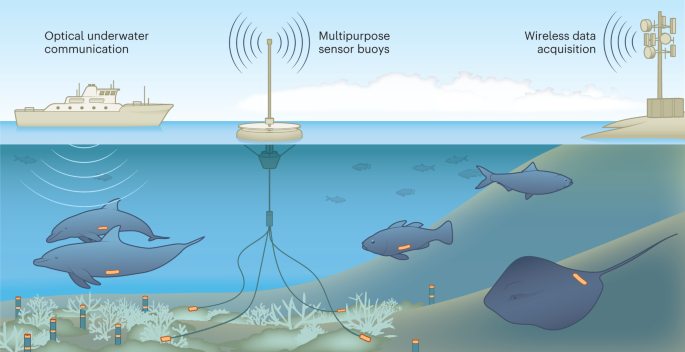
As we scale down from enterprise Wi-Fi, we encounter the realm of the Internet of Things (IoT) and Wireless Body Area Networks (WBANs). This is where Network Standards shift from high-throughput 802.11 protocols to low-energy standards like IEEE 802.15.4 (Zigbee) and 802.15.6 (WBAN). These networks are crucial for Travel Tech and Digital Nomad lifestyles, where wearable health monitors allow users to work remotely while tracking vital signs.
In WBANs, devices are placed on or inside the body. The challenges here are unique: signal attenuation through human tissue, limited battery life, and the critical need for low Latency. A pacemaker cannot afford to buffer video; it needs to send small packets reliably. This requires efficient Network Programming.
Modern Network Development often involves interacting with Bluetooth Low Energy (BLE) devices. The following example demonstrates how to scan for health-related services using Python’s asynchronous capabilities, a technique often used in Mobile Development and Network Automation.
import asyncio
# In a real environment, you would import BleakScanner from bleak
# from bleak import BleakScanner

async def scan_health_devices():
    """
    Scans for BLE devices broadcasting health-related services.
    Demonstrates asynchronous Network Programming concepts.
    """
    print("Scanning for Body Area Network devices...")

    # Simulating discovered devices for this article
    discovered_devices = [
        {"name": "HeartRateMonitor_01", "address": "00:11:22:33:44:55", "rssi": -55},
        {"name": "GlucoseSensor_X", "address": "FF:EE:DD:CC:BB:AA", "rssi": -72},
        {"name": "Unknown", "address": "12:34:56:78:90:AB", "rssi": -88}
    ]

    # Filter and process devices
    for device in discovered_devices:
        # Simple signal threshold filtering (Edge Computing logic)
        if device['rssi'] > -80:
            print(f"Found viable sensor: {device['name']} [{device['address']}]")
            # Here you would initiate a connection sequence
            await connect_and_fetch_telemetry(device)

async def connect_and_fetch_telemetry(device):
    """
    Simulates fetching data from a sensor.
    """
    print(f"Connecting to {device['name']}...")
    await asyncio.sleep(0.5) # Simulate network latency
    print(f"Secure handshake complete. Receiving telemetry data via GATT.")

# Run the async loop
# asyncio.run(scan_health_devices())
print("Async loop execution simulated.")
This code highlights the shift towards asynchronous Socket Programming. In WBANs, devices sleep to save power and wake up only to transmit. Your code must handle these intermittent connections gracefully, unlike the persistent connections seen in standard Ethernet or Network Cables setups.
In-Vivo Networking: Nanoscale and Molecular Communication
The true frontier of wireless networking lies within the body itself: In-Vivo Networking. This involves communication between nanobots or bio-implants. Traditional electromagnetic waves (RF) face significant challenges inside the body due to water absorption and heating issues. Consequently, researchers are developing Network Protocols based on IEEE 1906.1, which covers nanoscale and molecular communication.
In molecular communication, information is encoded in molecules rather than bits. A transmitter releases particles (molecules) that propagate via diffusion to a receiver. This is radically different from IPv4 or IPv6 routing. There are no Routers or Switches in the traditional sense; the medium itself (blood, interstitial fluid) is the network.
To model this, Network Engineers and researchers use simulations. The code below simulates a basic molecular communication channel based on Brownian motion (diffusion), calculating the probability of a signal reaching a receiver. This represents the “Physical Layer” of a biological network.
import math
import random

def simulate_molecular_diffusion(num_molecules, distance_microns, diffusion_coefficient, time_step):
    """
    Simulates the transmission of a molecular signal (In-Vivo Networking).
    Uses 1D diffusion principles to estimate signal strength at the receiver.

    Args:
        num_molecules: 'Packet' size (concentration of molecules)
        distance_microns: Distance to the receiver nanobot
        diffusion_coefficient: Speed of diffusion in the medium (e.g., blood)
        time_step: Simulation duration
    """
    received_molecules = 0

    # Simplified Fick's Law / Brownian Motion probability
    # Probability that a molecule reaches distance x in time t
    if time_step <= 0: return 0

    denominator = math.sqrt(4 * math.pi * diffusion_coefficient * time_step)
    exponent = -(distance_microns**2) / (4 * diffusion_coefficient * time_step)
    probability_density = (1 / denominator) * math.exp(exponent)

    # Estimate received signal strength
    # In a real simulation, we would integrate over the receiver's volume
    estimated_concentration = num_molecules * probability_density

    return estimated_concentration

# Parameters for a theoretical nanobot in the bloodstream
molecules_transmitted = 1000000 # The "Payload"
distance = 10.0 # microns
D_blood = 100.0 # Diffusion coefficient (arbitrary units for simulation)
time = 0.1 # seconds

signal_strength = simulate_molecular_diffusion(molecules_transmitted, distance, D_blood, time)

print(f"--- In-Vivo Nanoscale Communication Simulation ---")
print(f"Transmitted Payload: {molecules_transmitted} molecules")
print(f"Distance: {distance} microns")
print(f"Signal Strength at Receiver: {signal_strength:.4f} concentration units")

if signal_strength > 500:
    print("Status: Signal Decoded Successfully (Logic High)")
else:
    print("Status: Signal Too Weak / Noise (Logic Low)")
This simulation underscores the complexity of Network Design at the nanoscale. Factors like flow rate, temperature, and enzymatic degradation act as “noise” or “packet loss.” Developing Error Correction codes for molecular communication is currently a hot topic in academic research.

Security, Cloud Integration, and Best Practices
Whether dealing with Travel Photography backups over hotel Wi-Fi or medical data from an in-vivo sensor, security is paramount. In-vivo networks introduce terrifying “bio-hacking” vectors. If a pacemaker’s wireless protocol is compromised, the result isn’t just data loss—it’s physical harm. Therefore, Network Security must be integrated into the Application Layer and firmware.
Secure Data Aggregation with APIs
Data collected from these micro-networks eventually travels to the cloud for processing. This usually happens via a gateway (like a smartphone) sending data to a REST API or GraphQL endpoint. Modern Software-Defined Networking (SDN) and Service Mesh architectures help manage this traffic.
Here is an example of a secure API endpoint using Python’s FastAPI, designed to ingest telemetry data. It emphasizes API Security and input validation, critical for preventing injection attacks or malformed data from crashing the system.

from fastapi import FastAPI, HTTPException, Header, Depends
from pydantic import BaseModel
from typing import Optional

app = FastAPI()

# Data Model for Telemetry (Input Validation)
class BioTelemetry(BaseModel):
    device_id: str
    timestamp: int
    pulse_rate: int
    oxygen_saturation: float
    battery_level: int

# Mock Authentication Dependency
async def verify_token(x_token: str = Header(...)):
    if x_token != "secure-nano-network-token":
        raise HTTPException(status_code=400, detail="Invalid X-Token header")
    return x_token

@app.post("/api/v1/telemetry/ingest")
async def ingest_telemetry(data: BioTelemetry, token: str = Depends(verify_token)):
    """
    Secure endpoint to receive data from Wireless Body Area Networks.
    Validates data types and authentication tokens.
    """
    # Logic to process data
    # In a real app, this would push to a database or message queue (Kafka/RabbitMQ)

    if data.pulse_rate > 200 or data.pulse_rate < 30:
        # Trigger alert system for anomalies
        print(f"CRITICAL ALERT: Abnormal heart rate detected from {data.device_id}")

    return {
        "status": "success",
        "message": "Telemetry received and verified",
        "processed_id": data.device_id
    }

# To run: uvicorn main:app --reload
print("API Endpoint logic defined. Ready for deployment.")
Best Practices for the Modern Network Engineer
To thrive in this evolving landscape, professionals must adopt a holistic view of networking:
- Embrace Network Virtualization: Use tools like GNS3 or EVE-NG to simulate complex topologies. Understand how Network Virtualization underpins modern cloud infrastructure.
- Automate Everything: Use Network Automation tools like Ansible or Terraform. Manual configuration of Routers and Switches is error-prone and unscalable.
- Security First: Implement Zero Trust architectures. Use VPNs for remote access and ensure DNS Protocol security (DNSSEC) is active.
- Understand the Edge: With Edge Computing, processing moves closer to the source (the body or the sensor). Learn how to deploy lightweight containers (Docker/Kubernetes) on edge devices.
- Monitor Performance: Use Network Tools to monitor Network Performance continuously. High Latency in a medical network is unacceptable.
Conclusion
Wireless networking has transcended the simple act of connecting a laptop to the internet. It now encompasses a vast spectrum, from the DNS Protocol resolving domain names to molecular signaling within the human bloodstream. The transition from macro-scale Wi-Fi to In-Vivo nanocommunication represents a paradigm shift in how we define connectivity.
For the Network Engineer, DevOps Networking professional, or System Administration expert, the future lies in adaptability. Mastering the fundamentals of TCP/IP and Packet Analysis provides the foundation, but the ability to learn new paradigms—like bio-integrated networks and molecular communication—will define the leaders of the next generation. As we continue to blur the lines between biology and technology, the network is no longer just around us; it is becoming part of us.