


Introduction: The Foundation of Modern Connectivity
In the vast, interconnected ecosystem of the internet, the ability to organize, secure, and optimize data flow is paramount. At the heart of this organization lies Subnetting, a fundamental concept in Computer Networking that transforms a single, chaotic network into a structured, efficient, and secure hierarchy. Whether you are a traditional Network Engineer managing on-premise hardware or a DevOps Networking specialist architecting complex Cloud Networking environments, mastering subnetting is non-negotiable.
Subnetting is the process of dividing a single large network into smaller, manageable sub-networks, or subnets. This practice is rooted in the TCP/IP protocol suite, specifically within the Network Layer of the OSI Model. Without effective subnetting, the internet would be a flat, unmanageable broadcast domain plagued by collision, excessive Latency, and severe security vulnerabilities. As we transition from legacy infrastructure to Software-Defined Networking (SDN) and Network Virtualization, the logic of IP addressing remains the constant bedrock.
This article provides a comprehensive deep dive into the mechanics of IPv4 and IPv6 subnetting, CIDR notation, and practical implementation strategies. We will explore how to calculate subnets programmatically, design robust Network Architecture, and apply these concepts to modern cloud platforms using Network Automation tools.
Section 1: Core Concepts of IP Addressing and CIDR
Understanding the Binary Backbone
To understand subnetting, one must first understand the anatomy of an IP address. An IPv4 address is a 32-bit number, typically displayed in dotted-decimal notation (e.g., 192.168.1.1). These 32 bits are divided into four octets. The magic of subnetting occurs when we manipulate the boundary between the “Network” portion and the “Host” portion of this address.
In the early days of the internet, we relied on Classful addressing (Class A, B, and C). However, this led to a massive waste of IP addresses. This inefficiency birthed CIDR (Classless Inter-Domain Routing). CIDR allows us to define the network mask with precision, indicated by a suffix like `/24` or `/27`. This suffix represents the number of bits turned “on” (set to 1) in the subnet mask.
The Role of the Subnet Mask
The subnet mask acts as a filter. When a Router or Switch processes a packet, it uses the subnet mask to determine if the destination IP is on the local network or requires routing to a gateway. This is done via a bitwise AND operation. If you are interested in Network Programming or building custom Network Tools, understanding this bitwise logic is essential.
Below is a practical example using Python to demonstrate how a computer calculates the Network Address from an IP and a Subnet Mask using bitwise operations. This is the fundamental logic used by every network device, from enterprise firewalls to your home WiFi router.
def calculate_network_address(ip_address, subnet_mask):
    """
    Calculates the Network ID based on IP and Mask.
    """
    # Convert IP and Mask to binary integers
    ip_parts = [int(x) for x in ip_address.split('.')]
    mask_parts = [int(x) for x in subnet_mask.split('.')]

    # Perform Bitwise AND operation
    network_parts = []
    for i in range(4):
        network_part = ip_parts[i] & mask_parts[i]
        network_parts.append(str(network_part))

    return ".".join(network_parts)

# Example Usage
my_ip = "192.168.10.155"
my_mask = "255.255.255.192" # This is a /26 mask

network_id = calculate_network_address(my_ip, my_mask)
print(f"IP Address: {my_ip}")
print(f"Subnet Mask: {my_mask}")
print(f"Network ID: {network_id}")

# Output Logic:
# 155 in binary: 10011011
# 192 in binary: 11000000
# AND Result:    10000000 (which is 128)
# Resulting Network ID: 192.168.10.128
Why Subnetting Improves Performance
By breaking a network into smaller segments, you reduce broadcast traffic. Broadcasts are packets sent to every host on the network. In a flat network with 1000 hosts, a single broadcast interrupts 999 other devices. By subnetting that into four networks of 250 hosts, you contain broadcasts to their specific segment. This directly improves Bandwidth utilization and reduces network congestion, a critical factor in Network Troubleshooting and optimization.
Section 2: Implementation Details and Calculation Logic
The Math Behind the Magic
Designing a Network Architecture requires calculating how many subnets you need and how many hosts per subnet are required. This involves “borrowing” bits from the host portion of the address to create network bits.
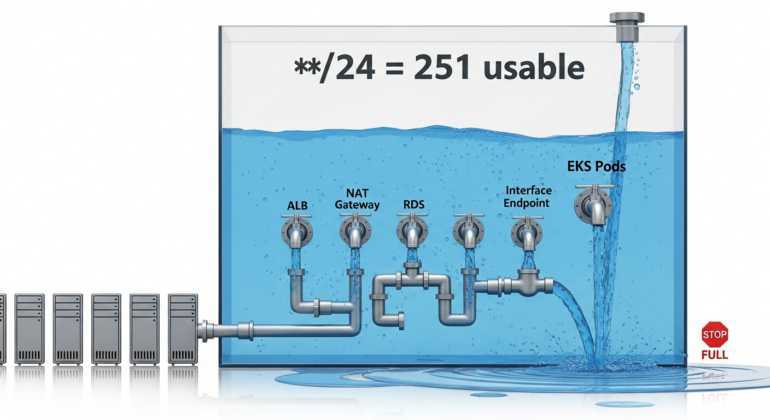
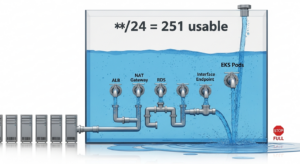
For example, if you have a Class C network (192.168.1.0/24), you have 254 usable hosts. If you need to create 4 distinct subnets for different departments (e.g., HR, Engineering, Sales, Guest WiFi), you must borrow 2 bits (2^2 = 4 subnets). The new mask becomes /26 (24 + 2). The remaining host bits are 6, meaning each subnet can have (2^6) – 2 = 62 usable hosts.
Note: We subtract 2 because the first address is the Network ID and the last address is the Broadcast Address.
Variable Length Subnet Masking (VLSM)
Traditional subnetting divides a network into equal parts. However, VLSM allows for efficiency by assigning masks based on the specific need of the subnet. A point-to-point link between two Routers only needs 2 IP addresses; assigning a /24 (254 hosts) is wasteful. With VLSM, you can assign a /30 or /31 to that link, while assigning a /23 to a large WiFi network.
Automating Calculations
In modern System Administration and Network Development, we rarely calculate these manually on paper once the architecture is decided. We use libraries to validate inputs and generate ranges. Below is a JavaScript example that could be part of a REST API service for a network management dashboard.
/**
 * Calculates the number of hosts and subnets based on CIDR
 * useful for Network Administration dashboards.
 */
function analyzeSubnet(cidr) {
    const prefix = parseInt(cidr.split('/')[1]);

    if (prefix < 0 || prefix > 32) {
        return { error: "Invalid CIDR prefix" };
    }

    // Calculate total bits available for hosts
    const hostBits = 32 - prefix;

    // Calculate total IP addresses
    const totalIPs = Math.pow(2, hostBits);

    // Calculate usable hosts (Total - Network Address - Broadcast Address)
    // Note: /31 and /32 are special cases in some routing contexts
    const usableHosts = (hostBits > 1) ? totalIPs - 2 : 0;

    return {
        cidr_notation: cidr,
        subnet_mask_bits: prefix,
        host_bits: hostBits,
        total_ips: totalIPs,
        usable_hosts: usableHosts,
        classification: (prefix >= 24) ? "Small/Local Subnet" : "Large/Supernet"
    };
}

// Example Usage
const subnetInfo = analyzeSubnet("10.0.0.0/27");
console.log(JSON.stringify(subnetInfo, null, 2));

/*
Expected Output:
{
  "cidr_notation": "10.0.0.0/27",
  "subnet_mask_bits": 27,
  "host_bits": 5,
  "total_ips": 32,
  "usable_hosts": 30,
  "classification": "Small/Local Subnet"
}
*/
Section 3: Cloud Networking and Infrastructure as Code
Subnetting in the Cloud (AWS, Azure, GCP)
The principles of subnetting transfer directly to the cloud, but the application differs slightly. In AWS, for example, you create a Virtual Private Cloud (VPC) with a large CIDR block (e.g., 10.0.0.0/16). You then slice this VPC into subnets. A critical distinction in Cloud Networking is the separation of Public and Private subnets.
- Public Subnets: Have a route to an Internet Gateway. Used for Load Balancing and public-facing web servers (HTTP/HTTPS Protocol).
- Private Subnets: No direct internet access. Used for databases, backend Microservices, and internal APIs. Outbound access is usually handled via a NAT Gateway.
Security Implications

Subnetting is a security boundary. By using Network Access Control Lists (NACLs) and Security Groups, you can restrict traffic flow between subnets. For instance, a database subnet should only accept traffic on port 5432 from the application subnet, rejecting all other attempts. This is a core concept in Network Security and defense-in-depth strategies.
Infrastructure as Code (IaC)
Modern DevOps Networking relies on Network Automation. Instead of manually clicking through a console, engineers define networks using code. Terraform is a popular tool for this. Below is an example of how to define a VPC and subnets programmatically, ensuring consistency across environments.
# Terraform Configuration for AWS Network Architecture

resource "aws_vpc" "main_network" {
  cidr_block = "10.0.0.0/16"

  tags = {
    Name = "Production-VPC"
    Project = "CloudMigration"
  }
}

# Public Subnet for Web Servers / Load Balancers
resource "aws_subnet" "public_subnet" {
  vpc_id     = aws_vpc.main_network.id
  cidr_block = "10.0.1.0/24"
  map_public_ip_on_launch = true

  tags = {
    Name = "Public-Subnet-A"
    Type = "DMZ"
  }
}

# Private Subnet for Databases / Internal APIs
resource "aws_subnet" "private_subnet" {
  vpc_id     = aws_vpc.main_network.id
  cidr_block = "10.0.2.0/24"

  tags = {
    Name = "Private-Subnet-A"
    Type = "Secure"
  }
}

# Output the IDs for use in other modules
output "vpc_id" {
  value = aws_vpc.main_network.id
}
Using IaC ensures that your Network Design is version-controlled and reproducible, reducing the risk of human error that often leads to Network Troubleshooting nightmares.
Section 4: Advanced Techniques and Best Practices
IPv6: The Future of Addressing
While IPv4 is still dominant, IPv6 is inevitable. IPv6 uses 128-bit addresses, providing a virtually infinite address space. Subnetting in IPv6 is simpler in concept but looks different because it uses hexadecimal. The standard subnet prefix for a site is often a /48, and the standard subnet size for a LAN is a /64. There is no need to conserve addresses in IPv6 as we do in IPv4; the focus shifts to logical hierarchy and route aggregation.
Handling Overlapping Networks with VPNs
For the Digital Nomad or remote worker utilizing Travel Tech, connecting via VPN is standard. A common issue arises when the local network (e.g., a coffee shop using 192.168.1.0/24) overlaps with the corporate network (also 192.168.1.0/24). This causes routing conflicts. A best practice for enterprise network design is to avoid common default subnets for corporate resources. Use obscure ranges like 10.50.0.0/16 to minimize conflicts for remote users.
Advanced Python for Network Validation
When building Network APIs or automation scripts, validating IP overlaps is crucial. Python’s standard `ipaddress` library is a powerful tool for Network Engineers and developers.
import ipaddress

def validate_network_design(vpc_cidr, subnet_list):
    """
    Validates that subnets belong to the VPC and do not overlap.
    """
    try:
        vpc = ipaddress.ip_network(vpc_cidr)
        print(f"Analyzing VPC: {vpc}")

        # Convert strings to network objects
        subnets = [ipaddress.ip_network(s) for s in subnet_list]

        # Check 1: Are all subnets inside the VPC?
        for subnet in subnets:
            if not subnet.subnet_of(vpc):
                print(f"ERROR: Subnet {subnet} is NOT contained in VPC {vpc}")
                return False

        # Check 2: Do subnets overlap with each other?
        for i, s1 in enumerate(subnets):
            for j, s2 in enumerate(subnets):
                if i != j and s1.overlaps(s2):
                    print(f"ERROR: Overlap detected between {s1} and {s2}")
                    return False

        print("SUCCESS: Network design is valid and collision-free.")
        return True

    except ValueError as e:
        print(f"Input Error: {e}")
        return False

# Test Data
vpc_block = "10.0.0.0/16"
proposed_subnets = ["10.0.1.0/24", "10.0.2.0/24", "10.0.1.128/25"]
# Note: 10.0.1.128/25 overlaps with 10.0.1.0/24

validate_network_design(vpc_block, proposed_subnets)
Best Practices for Subnetting
- Plan for Growth: Always leave room in your VPC or network block. If you use consecutive subnets (e.g., 10.0.1.0/24 and 10.0.2.0/24), you cannot expand the first subnet later without re-addressing. Leave gaps.
- Standardize: Use consistent CIDR blocks across environments (Dev, Staging, Prod) but different second octets (e.g., 10.10.x.x for Dev, 10.20.x.x for Prod) to prevent confusion and facilitate Packet Analysis via tools like Wireshark.
- Zone-Based Security: Align your subnets with security zones. Place Web Services in DMZ subnets and databases in deep private subnets.
- Use Tools: Do not rely on mental math. Use IP calculators or write scripts (as shown above) to verify your design before deployment.
Conclusion
Subnetting is more than just binary arithmetic; it is the structural framework of the internet. From optimizing Network Performance and reducing Latency to securing sensitive data in the cloud, the way we segment our networks dictates the reliability of our systems. As technologies evolve toward Edge Computing, Service Mesh architectures, and IoT, the number of connected devices will explode, making efficient addressing even more critical.
Whether you are configuring Firewalls, writing GraphQL resolvers that interact with network services, or simply setting up a robust home lab for Travel Photography backups, a solid grasp of CIDR and subnetting is an invaluable skill. By combining foundational knowledge with modern Network Automation tools, you can build scalable, secure, and resilient infrastructures ready for the future of connectivity.